Crying Woman SVG: Capturing Raw Emotion in Design
Every designer knows the challenge of finding visuals that convey complex human emotions without crossing into melodrama. The Crying Woman Svg Vector Illustrations collection delivers exactly that balance—authentic, relatable emotional expression packaged as versatile design assets. This isn't just another set of cartoon characters; it's a toolkit for visual storytelling that taps into universal experiences of sadness, reflection, and healing.
Understanding the Visual Language of These Illustrations
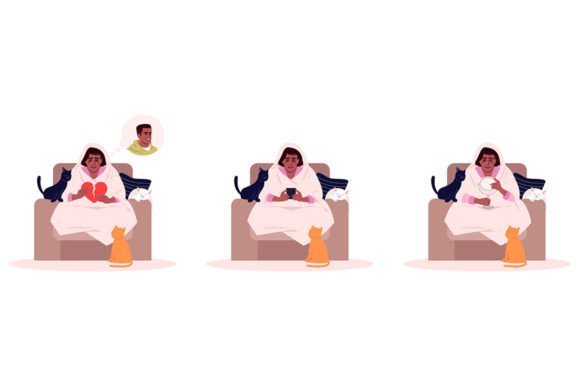
The Crying Woman flat vector illustrations set presents a Sad African American lady as isolated cartoon characters with remarkable sensitivity. What makes this collection stand out is its nuanced approach to depicting melancholy and depression. The illustrations avoid cartoonish exaggeration, instead offering genuine emotional weight through thoughtful body language, subtle facial expressions, and carefully chosen visual metaphors.
Each illustration in this kit tells a specific story. You'll find a girl sitting with a broken heart, a woman clutching her phone after a relationship breakup, another gazing into a mirror with quiet resignation. The styling leans toward contemporary flat design with clean lines and limited color palettes, making these assets remarkably adaptable across different project contexts. The transparent backgrounds in SVG and PNG formats ensure seamless integration into any layout, while the white background versions in EPS, JPEG, and AI formats provide ready-to-use options for print projects.
Where These Emotional Illustrations Truly Shine
The practical applications for Crying Woman Svg Vector Illustrations extend far beyond obvious mental health content. As someone who's worked on diverse design projects, I've found emotional illustration sets like this invaluable in unexpected contexts.
For brand identity work, these illustrations can humanize corporate communications during sensitive announcements or social responsibility campaigns. A healthcare startup might use them to discuss mental health services with authenticity. An HR consultancy could incorporate them into training materials about workplace wellbeing. The key is using these assets to create genuine connection rather than performative empathy.
In editorial design, particularly for magazines, blogs, and digital publications covering relationships, personal growth, or social issues, these illustrations provide visual anchors for complex narratives. They work beautifully as section headers, sidebar graphics, or standalone visual essays. The consistent character design across the three illustrations allows for visual continuity across multiple articles or chapters.
Social media graphics represent another natural fit. In an era where audiences crave authenticity, these illustrations cut through polished perfection. Mental health advocates, relationship coaches, and personal development creators can use them to create posts that resonate emotionally while maintaining professional polish. The transparent background PNGs are particularly useful for Instagram stories and Pinterest pins where layered compositions matter.
For packaging design targeting therapeutic products, self-care brands, or literary works dealing with emotional themes, these vectors add instant emotional context. Imagine a journal cover featuring the mirror illustration, or a tea brand's packaging incorporating subtle emotional motifs. The flat vector style ensures scalability without quality loss—critical for packaging applications.
Practical Integration: Making These Assets Work for Your Project
Working with emotional illustration sets requires thoughtful implementation. Here's what I've learned about using assets like the Crying Woman Svg collection effectively.
Color palette alignment matters significantly. While the illustrations come in their default colors, most designers will want to adjust hues to match their project's palette. The vector formats (SVG, EPS, AI) make this straightforward. Consider how color temperature affects emotional reading—cooler tones might suggest isolation, while warmer palettes could imply comfort or hope.
Contextual pairing with typography requires careful balance. These illustrations carry substantial emotional weight, so pairing them with overly decorative fonts might create visual competition. Instead, consider clean sans serif font options for body copy and reserve more expressive script font or handwritten font choices for limited headline use. The goal is complementing, not competing with, the illustration's emotional impact.
Scale and placement influence how audiences receive the message. A small, subtle use might serve as an emotional accent, while a dominant placement makes a bolder statement about your content's focus. Test different sizes in your layouts to find the right balance for your specific application.
For web design applications, consider how these illustrations perform at different screen sizes. The clean vector lines ensure legibility even at smaller dimensions, but the emotional nuances might get lost if too small. Plan your responsive breakpoints accordingly.
Technical Considerations for Professional Use
The file format variety in this collection—EPS, JPEG, AI, SVG, PNG—covers virtually every professional workflow need. The vector formats are essential for projects requiring scalability, while the raster options work for quick implementations where vector editing isn't necessary.
Licensing deserves attention for commercial applications. While the product description mentions commercial use, always verify specific usage rights for your intended application, especially for large-scale distribution or merchandise. Most premium illustration sets like this offer clear commercial licensing, but it's worth confirming before committing to a major campaign.
For logo design or brand mark applications, these illustrations would typically serve as supporting visual elements rather than primary logos. Their detailed nature might not simplify well for very small applications like favicon sizes, but they excel as secondary brand assets, website headers, or marketing collateral elements.
The collection's focus on a specific emotional theme makes it particularly valuable for niche applications. Mental health professionals, relationship counselors, divorce attorneys, and social service organizations will find these illustrations speak directly to their audience's experience. Even broader applications like literary magazines, poetry collections, or film festival promotions dealing with human drama can benefit from this focused emotional vocabulary.
What makes this set genuinely useful is its specificity. Rather than generic "sad person" illustrations, we get culturally thoughtful representation with narrative context. The broken heart, phone, and mirror aren't just props—they're storytelling devices that help audiences immediately recognize the emotional scenario being presented.
As design professionals, our job isn't just to make things look good—it's to communicate effectively. The Crying Woman Svg Vector Illustrations give us a nuanced vocabulary for discussing difficult emotions with visual integrity. In a design landscape often dominated by cheerful, optimistic imagery, these assets provide essential balance for projects requiring emotional authenticity.
Whether you're creating a mental health awareness campaign, designing a book cover about relationships, building a therapy practice website, or developing social media content for a wellness brand, this illustration set offers ready-to-use emotional resonance. The technical quality and thoughtful design make it a practical addition to any designer's asset library, particularly for projects where human connection matters more than visual perfection.