Halloween Yeti Costume Illustrations: Beyond the Font
When you think of design assets that carry a specific personality, you usually picture a typeface—a premium font with a distinct style. But what happens when you shift from typography to illustration? You get something like the Halloween Yeti Costume Illustrations. This isn't a serif font or a sans serif font; it is a distinct set of vector graphics designed to inject a specific kind of whimsy into your projects. It’s a creative asset that bridges the gap between spooky holiday fun and the adorable nature of a mythical creature.
The core appeal of this design package lies in its versatility. While the name suggests a specific holiday, the underlying style of a costumed character—whether it's a friendly beast in a pumpkin outfit or a monster wrapped in festive gear—transcends a single date on the calendar. For designers, publishers, and entrepreneurs, this represents a shift from relying solely on modern typography to building a brand identity that feels approachable and story-driven.
The Visual Personality: More Than Just a Monster
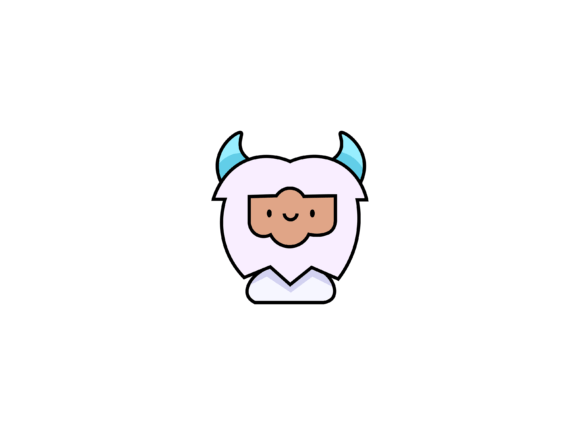
Let’s talk about the actual look of these illustrations. A "Yeti" in a costume is inherently a subversion of expectations. It takes a creature often depicted as elusive or scary and humanizes it through the act of dressing up. The visual style here typically leans toward bold lines, rounded forms, and a playful color palette that screams "fun" rather than "fear." This is crucial for packaging design and editorial design, where the goal is often to invite the viewer in rather than push them away.
The character design usually balances detail with simplicity. You want enough detail to make the character interesting on a large scale—like a poster or a T-shirt—but simple enough that it remains recognizable when shrunk down to a favicon or a small icon on a mobile screen. This balance is the hallmark of professional design assets. When you download a file set like this, including the 1 File Ai format and 1 File EPS format, you are getting the scalable vector foundation needed to maintain that clarity at any resolution.
Practical Applications: From Screen to Print
So, where does a Halloween Yeti fit into your workflow? The applications are surprisingly broad, extending far beyond web design or seasonal flyers. Because the illustrations are provided in 1 File JPG format 300dpi and 1 File PNG format 300dpi, you have high-resolution options ready for immediate production.
Consider the world of physical products. For a small business owner or a crafter, these illustrations are perfect for:
- Apparel and Accessories: The character works beautifully on T-shirts, hoodies, and totebags. The vector nature allows you to scale the art for a full-chest print or a small pocket logo without losing quality.
- Home Decor: Think about pillow covers or throw blankets. A repeating pattern of costumed Yetis creates a playful, cozy aesthetic that fits well into seasonal home decor lines.
- Stationery and Publishing: For authors and publishers, specifically in the Book / Notebook / Children Book Design space, this character is a goldmine. It can serve as a mascot, a chapter header illustration, or the central cover art for a spooky-themed children’s story.
On the digital side, the asset is equally robust. Marketers and content creators can utilize the PNG files (which usually come with transparent backgrounds) to create engaging social media graphics. Imagine a Halloween sale announcement where the Yeti is peeking out from behind the text block. It adds a layer of depth that flat text or generic stock photos simply cannot achieve. Furthermore, the design is ideal for phone case manufacturing, where a central character motif often performs better than complex, busy backgrounds.
Integrating Illustrations into Brand Strategy
As a creative professional, you know that consistency is key to brand identity. However, consistency doesn't mean boring. It means finding a visual language that speaks to your audience repeatedly. If your brand voice is playful, quirky, or family-friendly, incorporating a mascot like the Halloween Yeti can significantly boost audience engagement.
One of the most common mistakes in graphic design is treating illustrations as an afterthought. Instead, try using the Yeti as the anchor for your layout. Let the character dictate the flow of your editorial design. If the Yeti is looking to the right, place your headline on the right to catch the viewer's gaze as it follows the character's eyes. This is a classic technique used in logo design and advertising to direct visual hierarchy.
Moreover, don't limit this to Halloween. While the prompt mentions it is Suitable For Easter or other holidays, the "costume" aspect allows for re-contextualization. You can swap out the background colors or add accessories to fit a winter holiday or a generic "party" theme. This adaptability makes the file set a long-term asset in your library, not just a one-off seasonal download.
Technical Execution and Workflow
From a workflow perspective, having access to the Ai format (Adobe Illustrator) and EPS format is non-negotiable for serious designers. These formats allow you to deconstruct the illustration. You might love the body of the Yeti but want to change the color of its hat to match a specific client's brand palette. With vector files, this is a simple task. You can adjust anchor points, change fill colors, and integrate the art seamlessly into larger compositions.
For those working in print environments, the inclusion of 300dpi files ensures that your printed paper products—whether they are flyers, brochures, or notebook covers—are crisp and professional. Low-resolution assets are the enemy of professional printing; they result in pixelation that can ruin a design's credibility. By providing high-res JPG and PNG options alongside vectors, this package covers all bases for immediate production needs.
Ultimately, the Halloween Yeti Costume Illustrations serve as a reminder that great design isn't just about the perfect font pairing or the right serif font. It is about the holistic picture. It’s about how a character can make a child smile on a book cover, how a mascot can make a social media post shareable, and how a playful illustration can transform a generic totebag