Unearthing Natural History: Vintage Primate Illustrations
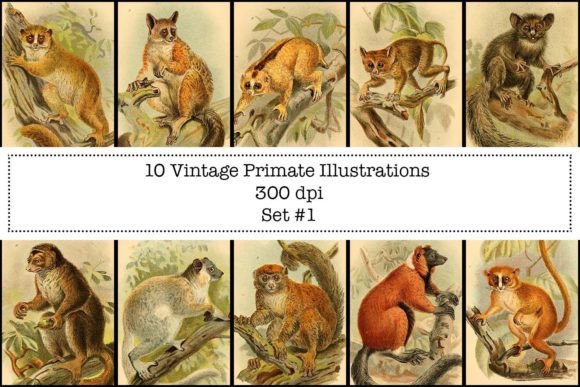
In a world saturated with digital perfection, there’s a distinct pull toward the tangible, the imperfect, and the historically authentic. If you find your creative projects lacking a certain depth or narrative weight, the solution might lie in the archives of Victorian-era natural history. Specifically, Vintage Primate Illustrations - Set 1 offers a curated collection of scientific artistry that feels both timeless and deeply personal. This isn't just a random assortment of images; it is a visual journey back to 1894, sourced directly from Henry O. Forbes' seminal work, A Hand-Book to the Primates. For designers, crafters, and content creators seeking to inject a sense of scholarly elegance and organic texture into their work, these illustrations provide a versatile foundation.
The Aesthetic of Victorian Naturalism
Understanding the appeal of this set requires looking at the style of the source material. The late 19th century was a golden age for scientific illustration, where artists had to rely on precise hand-drawn lithography to capture the anatomy and character of wildlife. The images in Vintage Primate Illustrations - Set 1 are largely unedited, retaining the original paper textures and the subtle imperfections of a book that has survived for over a century. While some spot healing has been applied to remove severe damage, the "wear" remains, giving the files an authentic patina that cannot be faked by modern filters.
Visually, these illustrations strike a balance between scientific precision and artistic charm. You won't find the flat, vectorized look of modern clipart here. Instead, expect intricate cross-hatching, varied line weights, and a monochromatic palette that emphasizes form and fur texture. This "analog" aesthetic is exactly what makes them a powerful design asset. They possess a personality that is serious yet approachable, making them perfect for projects that need to convey authority, curiosity, or a connection to the natural world.
Practical Applications for Modern Creators
The versatility of these primates extends far beyond the history books. Because the files are saved as high-resolution JPEGs (300dpi), they are ready for both heavy-duty print production and crisp digital display. Here is how different creative professionals can leverage this set:
- Junk Journaling and Scrapbooking: The vintage nature of the paper background makes these images ideal for collage. They blend seamlessly with other ephemera, tea-stained papers, and muted color palettes.
- Mixed Media Art: Artists can use these as focal points in acrylic paintings or gel plate transfers. The high contrast of the original ink drawings ensures the subject remains visible even when layered under paint or texture mediums.
- Logo Design and Brand Identity: For businesses in the education, eco-tourism, or artisanal sectors, a vintage primate illustration can serve as a distinctive mascot. It conveys a brand identity rooted in sustainability and timelessness.
- Packaging Design: Imagine these illustrations on a coffee bag, a craft beer label, or a botanical soap wrapper. The detailed linework suggests a hand-crafted, premium product.
- Social Media and Web Design: Use these images as background textures, hero images for blog posts about history or biology, or unique stickers for Instagram Stories.
Integrating into a Cohesive Design System
When working with vintage illustrations, the goal is to create a dialogue between the old and the new. Because the illustrations are detailed and organic, they pair exceptionally well with clean, modern serif fonts or sans serif fonts. Avoid using overly ornate or script fonts for body text, as this can compete with the complexity of the imagery. Instead, let the primates be the "display" element, and use a legible, modern typeface for your headlines and copy to ensure readability.
Consider the concept of visual hierarchy. If you are creating a poster, let the primate illustration occupy a significant portion of the canvas to draw the eye. Use the negative space around the animal to let the design breathe. In editorial design, such as a magazine layout or a book cover, these images work best when they are not crowded by other graphic elements. Their strength lies in their detail, so giving them room to shine is crucial for audience engagement.
Commercial Use and Licensing Considerations
One of the most significant advantages of Vintage Primate Illustrations - Set 1 is its commercial viability. You are free to use these images in physical products (like prints, t-shirts, or mugs) and digital products (like planners, wallpapers, or website themes). This flexibility is vital for entrepreneurs and small business owners looking to create unique merchandise without commissioning expensive custom art.
However, it is important to adhere to the licensing terms: the images cannot be resold "as is." This means you cannot simply package the raw JPEG files and sell them as a stock photo bundle. The value you provide as a creator comes from how you transform and incorporate these assets into a larger, cohesive design. By combining these historical illustrations with your unique typography choices and layout skills, you create a new work that is entirely your own.
Elevating Your Creative Process
Ultimately, the decision to use Vintage Primate Illustrations - Set 1 is about choosing character over convenience. In an era of one-click filters and generic stock photography, taking the time to integrate a piece of 19th-century history into your work shows a dedication to quality. Whether you are a content creator looking for a unique header image or a crafter