Campings & Lumberjack Illustrations: Versatile Hand-Drawn Assets
There’s a certain warmth and authenticity that hand-drawn elements bring to a project. They carry a human touch, a slight imperfection that feels genuine and approachable. The Campings & Lumberjack Illustrations Pack is a collection built entirely on this principle. It’s a set of design assets that captures the rugged, cozy, and adventurous spirit of the great outdoors through a distinctly artisanal lens. This isn’t about slick, corporate vector art; it’s about textures that feel like they were sketched in a cabin journal or carved into wood.
Understanding the Visual Character
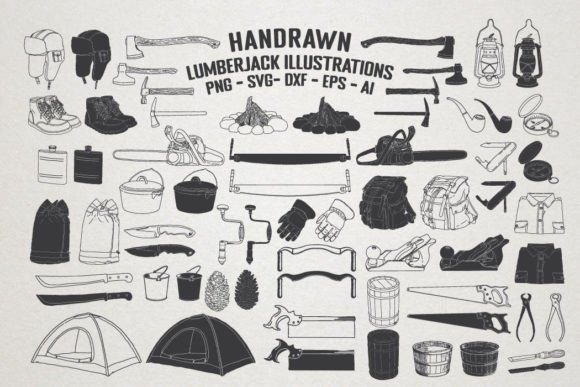
At its core, this pack is a hand drawn SVG vector and PNG clipart collection. The style is consistent—think of the kind of illustration you might see on a flannel shirt tag, a craft brewery label, or a vintage national park poster. The lines are confident but not rigid, with a natural weight variation that gives each element personality. You’ll find classic camping motifs: sturdy tents, crackling campfires, towering pine trees, and essential gear like axes and lanterns. The lumberjack theme adds icons like plaid patterns, bearded faces, and log stacks, all rendered with a charming, illustrative quality.
The appeal lies in its versatility within a specific niche. It’s a creative font of sorts for visual projects—it sets a clear mood. The pack includes 66 individual designs in multiple formats, which is a practical consideration for any designer. Having both black and white PNG versions with transparency at 300dpi means you can drop these elements onto virtually any background without messy editing. The vector files (AI, EPS, DXF, SVG) are the real workhorses, allowing you to scale these illustrations to any size—from a small sticker to a large wall sign—without losing a pixel of quality.
Where These Illustrations Truly Shine
Knowing what a design asset is and knowing how to use it effectively are two different things. The strength of the Campings & Lumberjack Illustrations Pack is its ability to inject character into projects that need to feel handmade, rustic, or adventurous. It’s not a display font for a luxury brand, but it’s perfect for creating an immediate visual connection with an audience that values authenticity.
For brand identity, this pack is gold for businesses in the outdoor, adventure, or artisanal space. Imagine a local craft brewery using these illustrations on their bottle labels, coasters, and tap handles. The hand-drawn style builds a story of small-batch, careful production. A camping equipment rental service could use the icons on their website, social media graphics, and printed brochures to create a cohesive, welcoming feel that stands apart from the sterile, corporate look of big-box competitors. The illustrations act as a visual shorthand for quality and experience.
In editorial design and publishing, these elements can break up text-heavy layouts. A travel blogger could use a small pine tree icon as a bullet point or a campfire as a section divider in their newsletter. For a printed magazine about hiking or outdoor living, the illustrations can complement articles, adding visual interest without overwhelming the copy. They work beautifully as spot illustrations, page borders, or decorative elements in the margins.
The practical applications extend far beyond print. In web design, you could use the SVGs as custom icons for a navigation menu, or as part of a hero image to set the site's tone. For social media graphics, they’re perfect for creating engaging Instagram stories, Facebook posts, or Pinterest pins that feel personal and shareable. A coffee shop could use a lumberjack icon in a post promoting a new maple-flavored latte, instantly tying the product to a cozy, rustic aesthetic.
Practical Guidance for Implementation
Adding a new set of design assets to your toolkit is exciting, but a little strategy goes a long way. Before diving in, take a moment to evaluate your project’s fit. Ask yourself: does the brand or project personality align with themes of nature, craftsmanship, nostalgia, or adventure? If you’re designing for a tech startup or a high-fashion label, this pack might not be the right font pairing for your visual language. Context is everything.
When you begin integrating the illustrations, think about hierarchy and balance. Because these are detailed, hand-drawn elements, they naturally draw the eye. Use them intentionally. A large campfire might work as a central graphic on a poster, but on a business card, a smaller, simpler icon like an axe or a tree might be more appropriate to maintain professionalism and readability. The goal is to enhance your message, not compete with it.
The inclusion of multiple file formats is a significant benefit, but it’s worth understanding their best use. The SVG vector files are ideal for any project that will be scaled—think logo design, signage, or large-format prints. They are also excellent for web use, as they load quickly and look crisp on any screen. The high-resolution PNGs are perfect for direct use in digital documents, presentations, or quick social media edits where you need a transparent background. For crafters using cutting machines, the DXF file is essential for creating stencils or vinyl decals.
Finally, remember that the power of these illustrations comes from their consistency. Using them alongside a clean sans serif font for body text creates a nice contrast that keeps things readable while letting the illustrations carry the stylistic weight. Avoid pairing them with other overly decorative or script fonts, as it can create visual clutter. Let the Campings & Lumberjack Illustrations Pack be the distinctive voice in your design, and use simpler typography to support it. This approach ensures your projects feel cohesive, professional, and full of the intended character.